
 Back To Blog


Credit Check Sample and Credit Report Example: A Complete Guide
 August 25, 2026
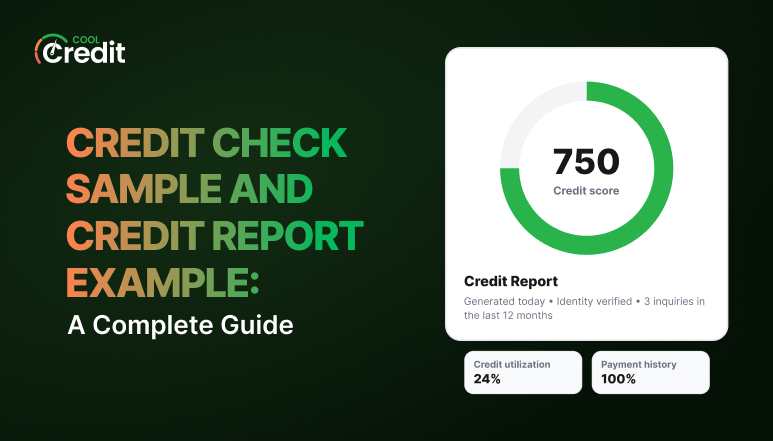
A credit report can contain a lot of information, from your credit accounts and payment history to credit inquiries and collection accounts. If you are reviewing one for the first time, understanding what each section means can feel overwhelming. Looking at a credit check sample can make it easier to understand what a real report may include and what information deserves your attention.
A sample credit report can help you see how credit-related information is typically organized and how different accounts, balances, payment records, and inquiries may appear. While the exact format can vary depending on the credit reporting agency or service, the core information generally follows a similar structure.
In this guide, we'll walk through a credit check sample, explain what each section means, and use a credit report example to show you what to look for. You'll also learn how to review your information, spot potential errors, and understand the steps you can take if something on your report does not look right.
Know Where Your Credit Stands
Get a clear view of your credit health
What Is a Credit Check?
A credit check is the process of reviewing information related to your credit history. Depending on the situation, a lender, credit card issuer, landlord, or another authorized organization may review your credit information to better understand your borrowing and payment history.
A credit check may include information such as
- Open and closed credit accounts
- Current balances and credit limits
- Payment history
- Credit inquiries
- Collection accounts or other negative information, if applicable
There are generally two types of credit inquiries: hard inquiries and soft inquiries. A hard inquiry may occur when you apply for new credit, while a soft inquiry can occur when you check your own credit or when a company reviews your credit for certain purposes that do not involve a new credit application.
A credit check and a credit report are closely connected, but they are not the same thing. A credit check refers to the process of reviewing credit information, while a credit report is the record that contains information about your credit history.
Understanding this difference can make the rest of a credit check sample easier to follow. In the next section, we'll look at what a sample credit report may look like and break down the key information it can contain.
What Does a Credit Check Sample Look Like?
A credit check sample can help you understand how credit information may be organized and what details you may see when reviewing your own credit profile. While the layout can vary between credit reporting agencies and credit-monitoring services, most reports include similar categories of information.
A complete credit report can include additional details, such as individual account information, payment history for each account, account opening dates, creditor names, and identifying information.
For example, one credit account may show the current balance, credit limit, payment status, and whether payments have been made on time. The report may also show inquiries made by companies that have accessed your credit information and any collection accounts or other negative information that may be reported.
What Information Appears in a Sample Credit Report?
A sample credit report can help you understand the main categories of information that may appear when your credit history is reviewed. While the format and details can vary between credit reporting agencies, most credit reports include information about your identity, credit accounts, payment behavior, and recent credit activity.
▪ Personal Information
Depending on the report, it may include your name, current and previous addresses, and other identifying information.
Review this section carefully. Incorrect personal details may not always affect your credit score, but unfamiliar information could indicate a reporting error or, in some cases, potential identity issues.
▪ Credit Accounts
This section lists credit accounts that may be reported in your credit history, such as credit cards, auto loans, mortgages, or other types of borrowing.
For each account, you may see details such as
- Name of the creditor
- Account type
- Date the account was opened
- Current balance
- Credit limit or original loan amount
- Account status
- Payment history
▪ Payment History
Payment history shows how you have managed payments on your reported credit accounts. Depending on the account and report format, you may see whether payments were made on time, as well as information about late or missed payments.
Because payment information can remain on your credit report for some time, it is important to review it for accuracy.
▪ Credit Inquiries
A credit report may also include information about companies or organizations that have accessed your credit file.
Inquiries can generally be categorized as hard or soft. The type of inquiry and whether it appears in a consumer-facing report can depend on the credit reporting agency and the purpose of the inquiry.
▪ Collections and Other Negative Information
If an account becomes seriously overdue, it may eventually be sent or sold to a collection agency. Collection accounts and other negative information may appear on a credit report, depending on the circumstances and applicable reporting rules.
Review these entries carefully to make sure the information is accurate and belongs to you.
Understanding these sections makes a credit check sample easier to interpret. In the next section, we'll look at how to read a credit report example and identify the information that may deserve closer attention.
Take Control of Your Credit
Monitor & improve your credit profile
How Do You Read a Credit Report Example?
Once you understand the main sections, a credit report example becomes easier to review. The goal is not simply to look at the information listed. You should also check whether the details are accurate, complete, and consistent with your actual credit history.
Here is a simple way to review your report.
1. Start With Your Personal Information
Check your name, current and previous addresses, and other identifying details. Look for spelling errors, unfamiliar addresses, or information that does not belong to you.
An incorrect detail does not always mean there is a serious problem. However, unfamiliar information can be worth investigating, especially if it appears alongside accounts or inquiries you do not recognize.
2. Review Your Credit Accounts
Go through each reported account and check the information carefully. Pay attention to:
- Account name
- Account type
- Current balance
- Credit limit or original loan amount
- Account status
- Date opened
Make sure you recognize each account and that the reported details match your records.
3. Check Your Payment History
Review whether payments are being reported accurately. Look for late or missed payments that you believe may be incorrect.
If you find information that does not match your records, gather any relevant documentation before taking the next steps to address a potential error.
4. Look at Credit Inquiries
Review the inquiries listed on your report and check whether you recognize them. An unfamiliar inquiry does not automatically mean fraud or identity theft, but it may be worth investigating.
5. Check for Collections or Other Negative Information
Finally, review any collection accounts or other negative entries. Confirm that the account belongs to you and that the reported information appears accurate. If you find something unfamiliar or potentially incorrect, do not ignore it.
| What Should You Look for When Reviewing Your Credit Report? When reviewing your credit report, focus on the information that may be inaccurate, unfamiliar, or outdated. Check for: ▪ Incorrect personal information ▪ Credit accounts you do not recognize ▪ Incorrect balances or credit limits ▪ Payment history that does not match your records ▪ Unfamiliar credit inquiries ▪ Incorrect collection accounts or negative information A credit check sample can help you understand where this information may appear. |
What Is the Difference Between a Credit Check and a Credit Report?
A credit check and a credit report are connected, but they serve different purposes. Understanding the difference can help you know what happens when someone reviews your credit and what information they may be looking at.
| Credit Check | Credit Report |
| The process of reviewing credit information | A record of your credit history |
| May be performed when you apply for credit or in other permitted situations | Contains details about your credit accounts and payment activity |
| Can involve a hard or soft inquiry | May include balances, payment history, inquiries, and collections |
| Helps a lender or other authorized party assess credit-related information | Helps you understand the information associated with your credit profile |
| Does not necessarily show every detail of your full credit history | Provides a broader view of the credit information reported about you |
| May be performed by lenders, credit card issuers, landlords, or other authorized parties | Can be obtained and reviewed by you |
A credit report is the information. A credit check is the review of that information.
| What Is the Difference Between a Credit Report Example and a Credit Page Example? The terms "credit report example" and "credit page example" are often used interchangeably, but they can describe different levels of information. A credit report example usually provides a broader view of a consumer's credit file. It may show multiple sections of a report, including personal information, credit accounts, payment history, credit inquiries, and collection accounts. A credit page example, by comparison, generally refers to a single page or specific section within that larger report. For instance, one page may display the details of your credit accounts, while another may focus on inquiries or payment history. |
What Should You Do If You Find an Error on Your Credit Report?
Finding an error on your credit report does not always mean the information is permanent. If you believe something is inaccurate, take the time to review the details and follow the appropriate dispute process.
Here are a few steps you can take:
- Identify the error
Review the account, balance, payment history, or other information that appears incorrect. - Gather supporting documents
Collect relevant records, such as account statements, payment confirmations, or correspondence that may support your claim. - Contact the appropriate credit reporting company: Submit a dispute and clearly explain what information you believe is inaccurate.
- Contact the company that provided the information
You may also need to contact the lender, creditor, or other company responsible for reporting the information. - Keep records and follow up.
Save copies of your dispute, supporting documents, and any responses you receive. Review your report again after the dispute process is completed.
The key is to act on information you believe is inaccurate rather than simply ignoring it. Reviewing your report regularly can also help you identify potential errors earlier.
Where Can You Get a Copy of Your Credit Report?
The first step to understanding your credit information is knowing where to access your report. In the United States, the three nationwide credit reporting companies—Equifax, Experian, and TransUnion—maintain consumer credit files based on information reported by lenders and other data furnishers.
You can request your credit reports through AnnualCreditReport.com, the official website authorized for consumers to access free credit reports from all three nationwide credit reporting companies.
It is important to remember that your reports may not look the same across all three companies. A lender or creditor may report information to one, two, or all three credit reporting companies. As a result, an account, balance, or other piece of information may appear differently or may not appear on every report.
For that reason, reviewing reports from all three can give you a more complete view of the credit information associated with your name.
Once you receive your report, use the credit check sample in this guide as a reference point. Review your personal information, credit accounts, payment history, inquiries, and any collection or negative information. Pay particular attention to details you do not recognize or believe may be inaccurate.
The goal is not just to obtain your credit report but to understand what it says and make sure the information being reported about you is accurate.
How Can CoolCredit Help You Better Understand Your Credit?
Getting a copy of your credit report is an important first step, but understanding what the information means and what to do next can be more challenging. You may see credit accounts, payment history, inquiries, collections, and other details without knowing which areas deserve your immediate attention.
This is where CoolCredit can help. CoolCredit is designed to make it easier to understand your credit profile by helping you review your credit information and identify factors that may be influencing your overall credit situation.
With CoolCredit, you can take a more informed approach to understanding your credit by:
- Getting a clearer view of your credit profile: Understand the information connected to your credit history and see the areas that may deserve a closer review.
- Identifying potential areas for improvement: Recognize factors that could be affecting your credit profile and explore appropriate next steps.
- Reviewing your progress over time: Stay informed about changes to your credit information and track your credit journey.
- Exploring additional guidance and support: Get help understanding credit-related concerns and deciding what actions may make sense for your situation.
A credit check sample can show you the type of information that may appear on a credit report. CoolCredit helps take the next step by making that information easier to understand and helping you move from simply seeing your credit information to knowing where to focus your attention.
Conclusion
A credit check sample gives you a practical way to understand the information that may appear on a credit report and how the different sections fit together. From personal information and credit accounts to payment history, inquiries, and collection accounts, each section provides a different part of your overall credit history.
Reviewing your credit report regularly can help you:
- Confirm that your personal and account information is accurate
- Recognize accounts and inquiries you do not remember
- Identify incorrect balances or payment information
- Understand how your credit history is being reported
- Spot potential issues that may require further attention
Remember that credit reports can vary in format and content depending on the credit reporting agency, so your report may not look exactly like a sample credit report or credit report example you see online.
FAQs
Q: What Is a Credit Check Sample?
A: A credit check sample is a fictional example that shows the types of information that may appear when a person's credit history is reviewed. It can include credit accounts, balances, payment history, inquiries, and collection information.
Q: What Does a Sample Credit Report Look Like?
A: A sample credit report typically contains sections for personal information, credit accounts, payment history, credit inquiries, and certain negative information. The exact format can vary by credit reporting agency.
Q: What Information Appears on a Credit Report?
A: A credit report may include personal identifying information, credit accounts, account balances, payment history, credit inquiries, and certain collection or other negative information.
Q: Is a Credit Check the Same as a Credit Report?
A: No. A credit report is a record containing information about your credit history. A credit check is the process of reviewing that information for a particular purpose.
Q: How Can I Check My Credit Report?
A: In the U.S., you can request your credit reports from the three nationwide credit reporting companies through AnnualCreditReport.com, the federally authorized source for free credit reports.
Q: What Should I Look for When Reviewing My Credit Report?
A: Check your personal information, accounts, balances, payment history, inquiries, and collection accounts. Pay particular attention to information you do not recognize or believe is inaccurate.
Q: What should I do if I find an error on my credit report?
A: First, verify the information against your records and gather supporting documentation. You can then dispute inaccurate information with the relevant credit reporting agency and, when appropriate, the company that supplied the information.
Q: Do Hard Inquiries Affect Your Credit Score?
A: A hard inquiry can affect your credit score, although the impact is generally small and temporary. Soft inquiries, such as checking your own credit, generally do not affect your score.